News
Rising Financing Costs Push Singapore Property Investment into a More Selective Phase
A record year followed by greater caution: Singapore property investment is changing direction
Following an active 2026, Singapore’s large-scale property investment market may slow in 2027.
Property consultancies suggest that rising financing costs are prompting buyers to reassess acquisition prices and investment returns. Negotiations for some major deals are taking longer, while certain assets face low bids or no bids at all.
A slower pace of transactions does not mean investors are withdrawing entirely. The market is becoming more selective: reasonable entry prices, stable rental income and opportunities to increase future income are becoming more important.
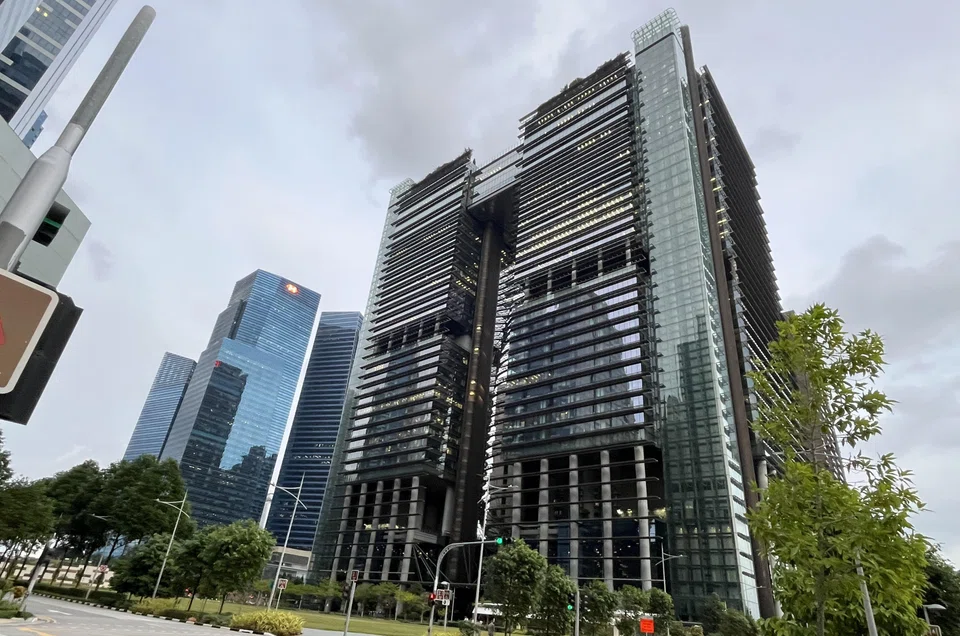
Uncertainty surrounds the major Marina One transaction
The potential sale of Marina One’s commercial component has attracted considerable attention.
The previously reported price was about S$5.7 billion. If completed, it would become Singapore’s largest single-asset property transaction. A new private fund under Hongkong Land had been expected to acquire it, with completion initially anticipated in August this year.
By early October, reports began circulating that the deal might fall through.
The specific reasons for the difficulty remain unclear. The acquisition’s scale, transaction terms and funding arrangements could all affect progress; it cannot simply be attributed to interest rates.
Nevertheless, the uncertainty comes at a time when investors are more cautious and the outlook for financing costs is less certain.
Higher borrowing costs prompt buyers to recalculate
For investors relying on loans to acquire property, higher interest expenses directly affect whether an investment is worthwhile.
Put simply, if rental income does not rise alongside borrowing costs, investors may retain less income.
This helps explain why some buyers are reviewing their offers, particularly for office assets with already narrow rental-return margins.
Other office assets attracting market attention include Lazada One, 30 Raffles Place, Bugis Junction Towers, Paya Lebar Green and One Raffles Place.
Beyond financing, investors are considering geopolitical developments, the economic outlook and how artificial intelligence may change corporate staffing and office demand.
2026 may still set a record, with a decline expected in 2027
Despite slower third-quarter activity, Singapore’s full-year property investment transaction value may reach a new high.
Savills projects total investment transactions of around S$55 billion in 2026, potentially easing to S$35 billion–S$45 billion in 2027.
These figures cover commercial property, residential investment transactions and government land sales. They do not refer solely to new condominium sales and are not a forecast of property prices.
Major transactions completed this year include:
| Transaction | Value |
|---|---|
| CapitaLand Integrated Commercial Trust’s acquisition of Paragon | Approximately S$3.9 billion |
| Hongkong Land’s acquisition of Wheelock Place | Approximately S$1.1 billion |
These large transactions lifted the annual result and create a high comparison base for next year.
Even if transaction values decline in 2027, they could remain near the higher annual levels seen between 2022 and 2024. Some deals negotiated this year may also complete next year.
A cooler third quarter does not mean a sudden market downturn
Different consultancies estimate property investment transactions, excluding government land sales, at around S$28.8 billion–S$34 billion for the first nine months of 2026.
Third-quarter estimates range from approximately S$3.8 billion to S$6.9 billion. Differences in methodology mean these figures are not identical.
Analysts attribute the slowdown partly to financing costs and partly to the high transaction base in the first half of the year.
Investors continue to evaluate assets with stable income and clear long-term prospects. The main change is a willingness to spend more time comparing options and greater attention to entry prices.
Buyers and sellers are developing different price expectations
A key challenge is the gap between buyers’ and sellers’ views of pricing.
Sellers may still reference transaction levels in the active 2026 market. Buyers factor future financing expenses, operating risks and expected returns into their offers.
Without agreement, transactions may be delayed.
Deal activity therefore depends not only on interest-rate movements, but also on sellers’ willingness to adjust expectations and buyers’ assessment of whether an asset can generate sufficient income at a reasonable price.
The report also notes that Singapore’s financing costs remain competitive compared with some other markets. The possibility of future increases should not be interpreted as meaning all investments are currently unattractive.
Offices are more sensitive, while retail and industrial assets remain in focus
Different property sectors have different capacities to absorb financing costs.
Grade A offices in the central business district generally yield around 3%–4%. A significant rise in borrowing costs could squeeze returns more readily. However, limited new supply and corporate leasing demand may support selected quality office assets.
Market references cited in the report indicate:
- Net yields of around 4%–5% for 99-year leasehold retail assets;
- Yields of around 6%–6.5% for industrial assets with approximately 20–25 years of lease remaining.
These figures relate to different assets and calculation assumptions. Yield alone cannot determine which sector is a better purchase. Industrial property also requires consideration of remaining lease tenure, tenancy agreements, maintenance and permitted-use restrictions.
Hotels, serviced residences, co-living projects and logistics facilities continue to attract some investors.
Major transactions may still emerge in 2027
If major office transactions involving Marina One, One Raffles Place and Frasers Tower proceed, they could support investment activity in the first half of 2027.
Large industrial transactions are also being prepared. Developers’ demand for government land sales to replenish land banks is expected to continue.
Some transactions already in advanced negotiations or due diligence may complete soon. However, major acquisitions require reviews of leases, building conditions and financial and legal documents. Investors generally will not rush to sign solely to save short-term interest expenses.
The next phase focuses on assets’ ability to keep generating income
Investment priorities in 2027 may shift from pursuing transaction volume towards more careful asset selection.
Investors will pay closer attention to:
- Tenant stability and opportunities to reduce vacancy;
- Reasonable scope for rental growth;
- Control of maintenance and operating expenses;
- Whether the purchase price leaves room for future risks.
Ordinary homebuyers should note that this report concerns large-scale property investment. Slower acquisitions of major office buildings do not directly imply that residential prices must fall.
Whether an institution acquires an entire building or an individual buys a home, a reasonable entry price, affordable financing costs and a holding arrangement suited to personal needs remain fundamental to assessing a purchase.