News
Where Is the Property Market Headed Under the Shadow of Tariffs? Experts Say Local Real Estate May Serve as a Safe Haven
Tariff War Jolts Global Markets: Stable Returns in Singapore Property Market May Draw Safe-Haven Capital
Escalating US tariff policies have sent shockwaves through global financial markets, triggering stock sell-offs and shrinking wealth. While investor confidence has been shaken, the spotlight has also shifted to the Singapore real estate market. Analysts widely believe that despite heightened uncertainties, Singapore property's stable returns and safe-haven appeal could channel capital back into the property market, especially amid amplified short-term volatility in equities.

Stock Market Volatility Weighs on Buyer Confidence
Data reveals that transaction volumes in the non-landed private residential resale market have recently rebounded, indicating that some buyers are reassessing the value of real estate as a safe-haven asset.
Instability in financial markets typically dampens buyers' immediate decision-making. Knee-jerk reactions in equity markets often prompt homebuyers to defer their purchasing plans, with discretionary or non-urgent owner-occupier buyers extending their wait-and-see stance.
While buyer sentiment may be dampened in the near term, there is no need for panic in the broader market. Trade war risks are indeed elevated and could soften demand temporarily, but Singapore's property market fundamentals remain sound over the medium to long term.
Long-Term Capital Still Favours 'Safety' of Singapore Assets
A well-balanced supply-demand dynamic, a resilient currency, and a robust governance framework endow the Singapore property market with safe-haven attributes, making it particularly attractive during turbulent times.
Even though Donald Trump's initial round of tariffs in 2018 sparked global jitters, Singapore private home prices have climbed 46.2% since then.
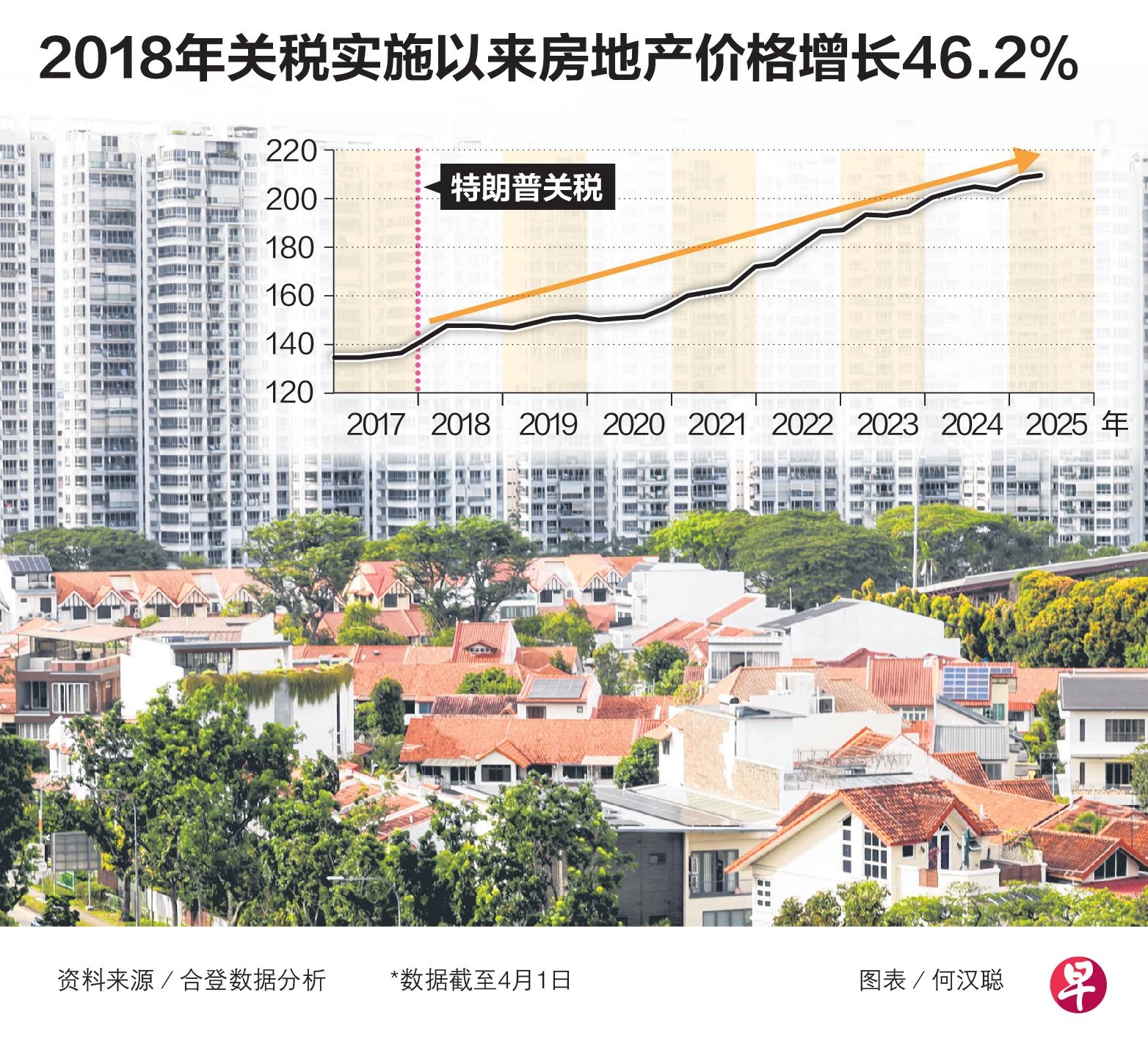
At developments such as JadeScape, for example, owners have reaped cumulative profits of up to S$4.4 million over the years.
While the 60% Additional Buyer's Stamp Duty (ABSD) remains a steep hurdle for foreigners, Singapore becomes even more compelling to deep-pocketed US buyers prioritising capital preservation and stability—especially since US citizens enjoy the same stamp duty treatment as Singapore citizens under the free trade agreement.
Branded Condos and New Launches to Serve as Capital Bellwethers
Market response will become apparent very soon. New launches hitting the market this weekend, such as One Marina Gardens and Bloomsbury Residences, arrive at a pivotal post-policy juncture. Whether they can sustain the strong momentum of earlier new project launches will serve as a crucial barometer for the market.
As long as pricing strategies are calibrated sensibly, new launches remain compelling even in uncertain times. If new launch prices are kept within a 5% premium over comparable neighbouring projects, buyers are still willing to commit.
Conversely, if developers aggressively raise prices amid volatile market conditions, first-weekend launch sales could drop by 20% to 25%.
Even with expectations of interest rate cuts, banks' lending criteria may not necessarily loosen in tandem, so one should avoid being overly optimistic about the immediate benefits of lower interest rates.
While some major developers might contemplate pacing out their launches, holding back by six to twelve months may not be the wisest move given the stringent five-year ABSD remission deadline.
HNWI Movements in Focus as Buying Behaviour Turns More Rational
Among buyer segments, analysts believe HDB upgraders could feel the pinch most. These buyers typically rely on proceeds from the sale of their existing flats and bank financing. Amid macroeconomic uncertainty, upgrading risks rise, prompting them to reassess their timing.
Baby boomers boast larger cash reserves and frequently assist their children with down payments, making them less vulnerable; HDB upgraders, juggling both mortgage obligations and cost-of-living pressures, are far more exposed to broader economic shifts.
In the near term, the market may see mild volatility and a gradual recovery, but over the long haul, it remains business as usual. In other words, projects underpinned by genuine intrinsic value will continue to stand out.