News
Singapore Property Market Amid Trade Storm: Investment Sales Cool as Residential Sites Anchor Volumes
Q1 Real Estate Investment Sales Fall 24%: Market Adopts Wait-and-See Stance Amid Trade Tensions
Against the backdrop of intensifying global economic uncertainties, Singapore's real estate investment market experienced a noticeable slowdown in the first quarter of 2025. According to reports, total investment sales in Q1 fell 24% quarter-on-quarter (QoQ) to approximately S$5.8 billion, reflecting the ongoing impact of international trade tensions on the local investment landscape.

Private Investment Halved, Public Sector Defies the Trend
While local real estate investment sales reached S$7.6 billion in Q4 2024, private sector investment tumbled 47.3% in Q1 2025, shrinking sharply from S$5.7 billion to S$3.0 billion. In contrast, buoyed by active Government Land Sales (GLS) tenders, the public sector saw transaction values climb 45.1% to nearly S$2.8 billion.
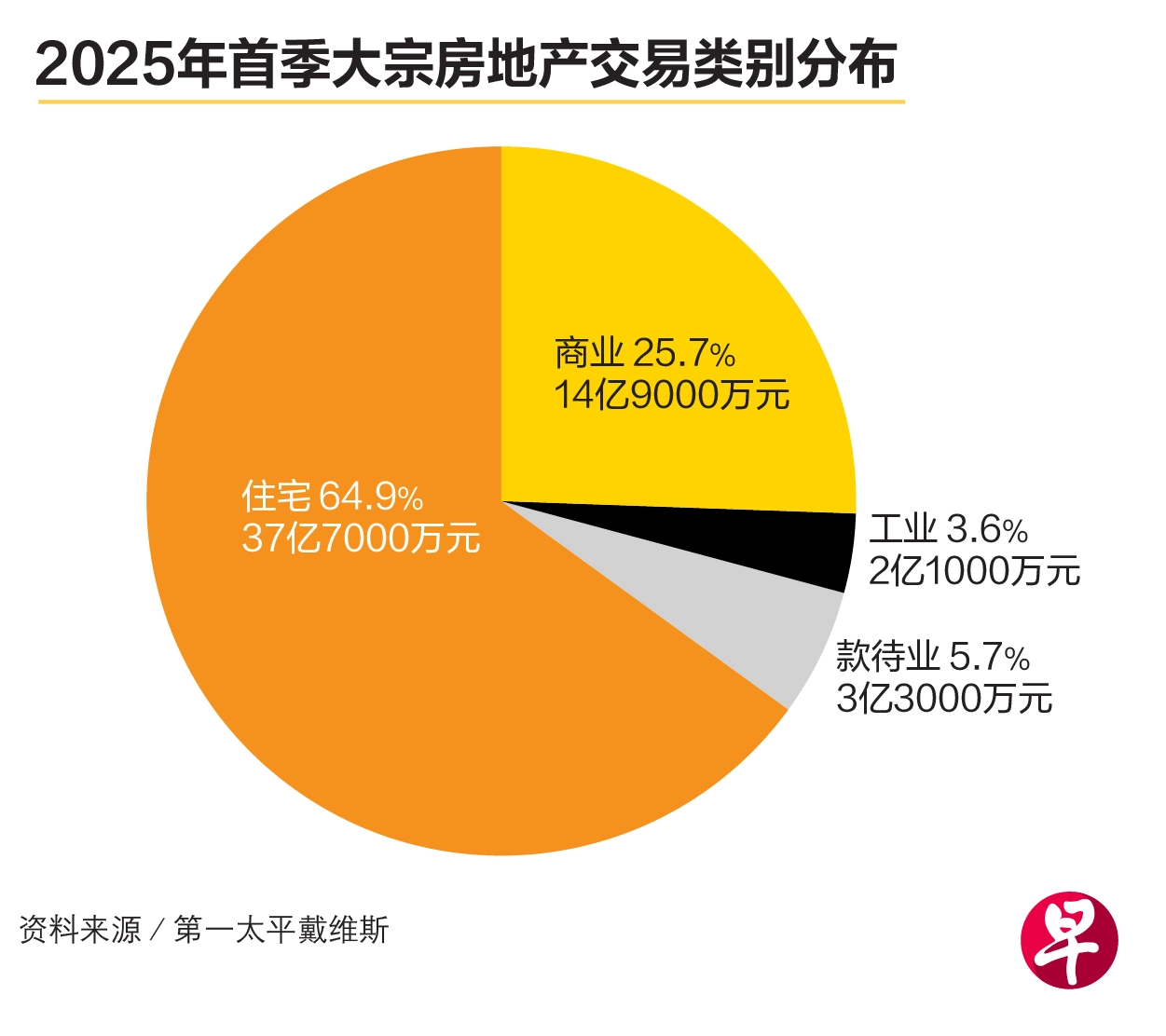
The government launched a total of five private residential sites and one industrial site during the first quarter, significantly anchoring overall residential transaction volumes. Consequently, the residential sector accounted for the largest share of investment sales this quarter, clocking S$3.77 billion—a 47.4% increase QoQ.
Notably, River Valley Apartments was successfully sold en bloc for S$56 million, translating to approximately S$1,622 per square foot per plot ratio (psf ppr).
Economic Uncertainties Prompt Investors to Adopt a Wait-and-See Approach
The fresh round of tariff measures introduced by the United States in early April is widely seen by the market as a major driver of global economic uncertainty. Analysts noted that if major economies adopt tit-for-tat retaliation strategies, the global trade environment could spiral into a vicious cycle, dampening real estate investment sentiment.
Analysts highlighted that it remains difficult to fully gauge the ripple effects of the tariff dispute, leaving the market laden with short-term variables. However, if certain countries manage to secure exemptions, they could potentially attract diverted capital flows.
Echoing patterns from past economic shocks, the immediate market reaction has typically manifested as paused negotiations, deferred deals, and a prevailing wait-and-see posture.
In light of current conditions, full-year investment sales projections have been revised downwards from S$23 billion to S$20 billion. Under more optimistic scenarios, full-year volume could still reach S$27 billion to S$30 billion, broadly on par with last year's S$29.3 billion.
Divergent Sector Performance: Hospitality Rebounds While Industrial Slumps
Performance across different asset classes diverged substantially this quarter:
Commercial Sector: The sale of Northpoint City South Wing in Yishun stood out as a major highlight, propelling commercial transaction values up 54.2% QoQ to nearly S$1.5 billion.
Hospitality Sector: With tourism steadily recovering and investor confidence returning, the first quarter recorded three hotel transactions totalling S$333 million, up 26.5% QoQ.
Industrial Sector: Weighed down by macroeconomic headwinds and subdued manufacturing demand, industrial real estate investment plunged by 90% to just S$211 million, recording sharp declines both quarter-on-quarter and year-on-year.
Outlook: Lingering Uncertainties Keep Market Cautious
At this juncture, policy directions across nations remain fluid, leaving market sentiment delicately balanced. Analysts generally believe that amid complex global geopolitical dynamics, Singapore retains its long-term appeal as a stable, safe haven for capital, even though the market will inevitably navigate near-term volatility.
As long as developers maintain prudent pricing strategies—for instance, keeping price premiums within 5% of comparable nearby developments—the overall market should hold steady.
Meanwhile, take-up rates at upcoming launches in both the northern region and the Central Area (such as One Marina Gardens and Bloomsbury Residences) will serve as key barometers of underlying market sentiment and price sensitivity.