News
Meeting Housing Needs While Preserving Nature: A Preview of Pasir Ris’ New Community
New Pasir Ris housing area to combine HDB flats and private homes while retaining 13 hectares of nature
More housing choices are planned for Singapore’s east.
The Housing and Development Board (HDB) announced on 23 November that it plans to build a new residential neighbourhood along Pasir Ris Drive 4, combining public HDB flats and private homes with amenities and community spaces.
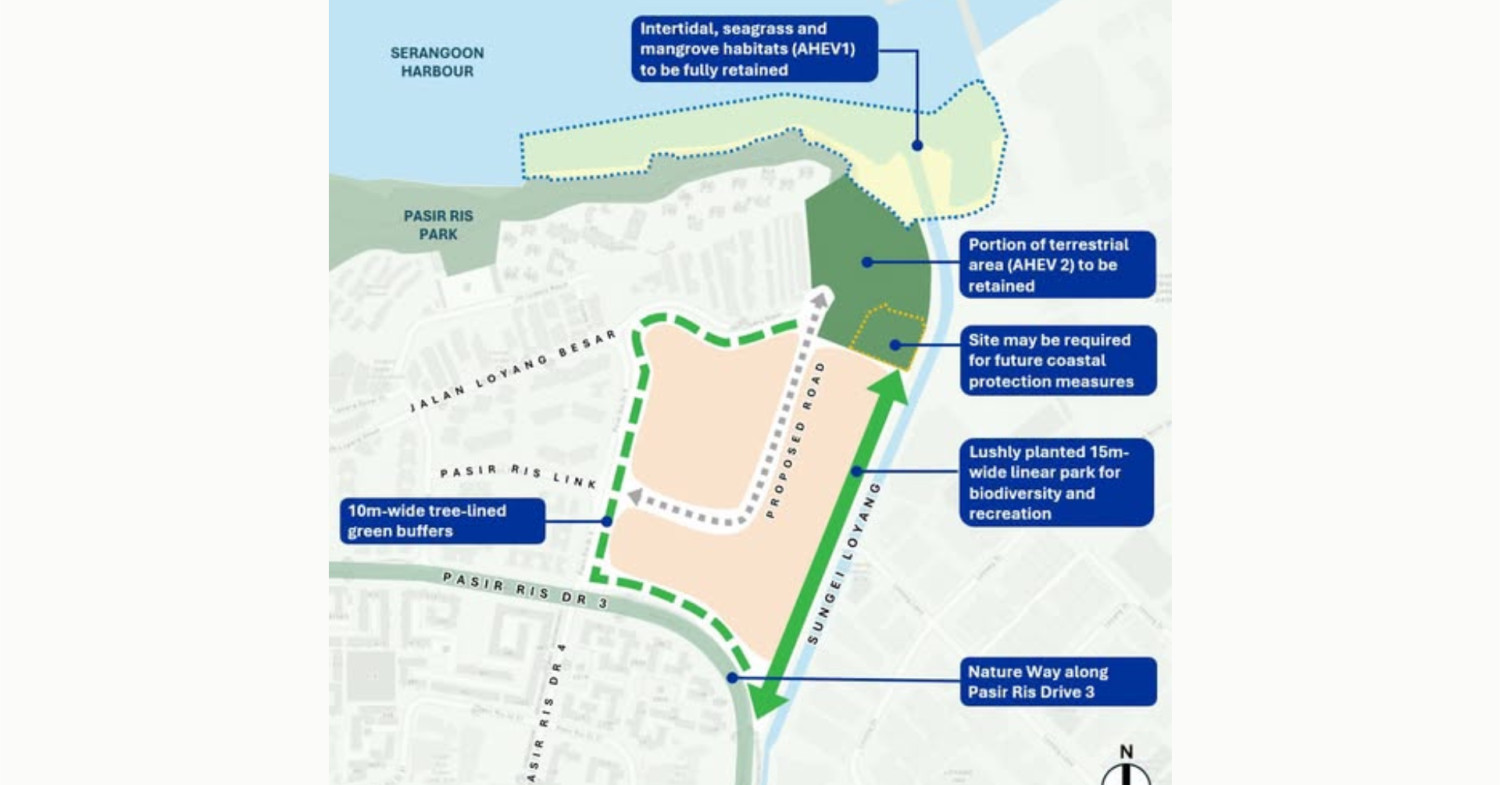
Under the preliminary plan, the new community will feature a green living environment. Following an environmental impact assessment, HDB proposed retaining about 13 hectares of existing natural habitat and adding a riverside park and walking spaces, balancing housing needs with the surrounding ecology.
Responding to housing demand with more HDB and private home choices
HDB noted that recent Build-To-Order projects in Pasir Ris, including Costa Grove and Costa Riviera I and II, attracted strong buyer interest, reflecting healthy housing demand in the area.
The proposed new community will offer different types of homes, providing more choices for families hoping to live in Pasir Ris.
The information released so far focuses on the community’s planning direction and nature conservation arrangements. The total number of homes, the split between HDB flats and private housing, and the launch timeline have not yet been announced.
The site faces the river and sits near mangroves and coastal vegetation
The proposed development site is currently wooded land near the banks of Sungei Loyang, beside coastal mangroves and other vegetation, and faces Serangoon Harbour.
According to HDB, the site was already zoned mainly for residential use in the Urban Redevelopment Authority’s 1980 Master Plan.
However, residential zoning does not mean the existing natural environment can be overlooked. Given the site’s proximity to several ecological habitats, the arrangement of homes, greenery and buffer spaces is an important part of the plan.
About 13 hectares of natural habitat to be retained
Following the environmental impact assessment, HDB proposed retaining the following areas:
| Area to be retained | Size | Main features |
|---|---|---|
| Coastal ecological habitats | About 8 hectares | Intertidal, seagrass and mangrove habitats |
| Existing vegetation | About 5 hectares | A buffer between the housing development and mangroves and existing streams |
| Total | About 13 hectares | Retain the existing natural environment and provide ecological buffers |
The five hectares of vegetation will help maintain a distance between the housing development and more sensitive ecological areas.
These arrangements are intended to reduce the development’s impact on the surrounding natural environment, but do not mean construction and future residential activity will have no impact at all.
A 15-metre-wide linear park along Sungei Loyang
In addition to retaining existing natural habitats, the new community plans to include a 15-metre-wide linear park along Sungei Loyang.
Green buffers will be provided along the northern, western and southern edges of the site, creating walking paths and access to greenery for residents.
The community’s future greenery will extend beyond landscaping between homes to include public riverside spaces and transition areas between housing and the surrounding natural environment.
Why not prioritise nearby developed land?
During the planning process, HDB also assessed other nearby developed sites, including the former Siglap Secondary School site and industrial land at Lorong Halus.
However, these sites have different land-use or timing constraints:
- Some are already included in future housing supply plans;
- Some must be retained for other national uses;
- Some cannot be made available within the required timeframe.
HDB said there are no suitable alternative developed sites nearby that can provide a comparable number of homes to the Pasir Ris Drive 4 site in the coming years.
The site selection therefore considered several factors, including the scale of housing supply, land use and development timing.
Environmental monitoring and management during construction
HDB also said it will implement an environmental monitoring and management plan to guide construction activities and manage the works’ potential impact on surrounding habitats.
From planning through construction, retaining ecological areas, providing vegetation buffers and continuing environmental monitoring are all part of the development arrangements.
For buyers interested in Pasir Ris, the plan could bring more HDB flats and private homes to the area, alongside new riverside greenery and community spaces.
Details to watch include the number of homes, amenities, development timeline and the implementation of the ecological conservation measures.