News · 买房必读指南
Key Restrictions for Housing Loan Applications: Total Debt Servicing Ratio (TDSR) and Loan-to-Value (LTV)
Loan-to-Value (LTV) Limits for Private Residential Properties (Excluding Executive Condominiums)
The Loan-to-Value (LTV) Limit is the maximum amount you can borrow from any financial institution.
The LTV limit depends on the loan tenure, the borrower's age upon full repayment, the number of outstanding housing loans, and whether the borrower is an individual or an entity. Please note that the minimum cash downpayment required for the purchase is also affected by these factors.
The chart below provides a brief overview of the Loan-to-Value limits and minimum cash downpayment required:

Total Debt Servicing Ratio (TDSR) refers to the portion of a borrower's gross monthly income that goes towards servicing monthly debt obligations.
Property loans must not exceed a Total Debt Servicing Ratio (TDSR) of 55%:
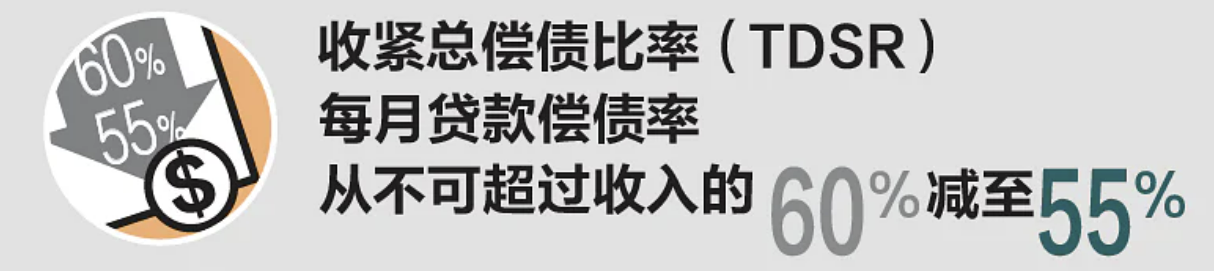
Before calculating the housing loan amount, any outstanding monthly debt obligations—such as credit card balances, car loans, personal loans, outstanding mortgages, etc.—will be deducted.
The remaining amount will be used to calculate the maximum mortgage loan based on the prevailing market interest rate, or a stress-test rate of 3.5% for residential properties and 4% for commercial properties, whichever is higher.
The eligible loan amount will be the lower of the TDSR calculation and the LTV limit.