News
Are the Heavy Cooling Measures on Private Homes Working?
 Whenever the government steps in to cool the local property market, netizens invariably rush to interpret the market's response. If buying momentum remains robust, they complain that the cooling measures lack "bite". Yet, if the market turns quiet, they gloat that buyers have been scared away.
In truth, there is no need to take these online or coffee-shop commentaries too seriously. Much like the blind men feeling the elephant, such superficial views can mislead the market, distort the policymakers' true intentions, or muddy market signals.
The latest round of cooling measures, which took effect on 27 April, came out of the blue. Just like previous rounds, it was announced late at night, catching the market off guard. This time, the government delivered a heavy blow by hiking the Additional Buyer's Stamp Duty (ABSD). Foreign buyers took the biggest hit, with their ABSD doubling from 30% to 60%—the steepest single increase since the tax was introduced. In contrast, the ABSD hikes for Singapore Citizens and Permanent Residents were relatively moderate, rising by three to five percentage points.
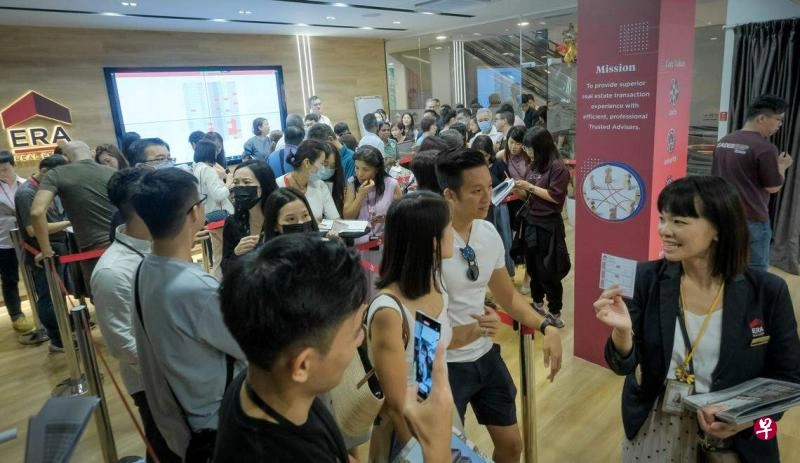
On the very first weekend after the measures were implemented, Blossoms by the Park, a new private residential launch, could not hit the brakes in time and had to push ahead with its sales launch. It sold over 200 units, or roughly 75%, on its first day, setting a new price benchmark for the one-north precinct with an average price of $2,423 psf.
Such unexpected stellar results not only came as a massive relief to the nervous developer, but also prompted some netizens to jump to immediate conclusions—arguing that the government's heavy dose of medicine had failed to dampen red-hot buying demand, and that buyers simply shrugged off the measures.
A week later, The Continuum, a large freehold luxury condominium in the East Coast, made its debut. It also moved over 200 units on launch day, accounting for about 26% of the development, at an average price of $2,732 psf. Looking purely at the take-up rates of the two launches, netizens quickly changed their tune, claiming that while the cooling medicine was slow to take effect, it had finally kicked in.
Such short-sighted and fence-sitting commentary is truly laughable.
Judging whether cooling measures have succeeded based merely on the sales of these two new launches is premature. After all, the two developments differ significantly in scale. Blossoms by the Park has only 275 units, whereas The Continuum boasts 816 units. Take-up percentages aside, both projects moved more than 200 units, meaning their overall sales volume was virtually neck and neck.
Located in the one-north enclave, Blossoms by the Park faced little competition from new launches, with the previous project in the area, One-North Eden, having launched back in 2021. Furthermore, housing demand in the precinct has always been strong due to the surrounding high-density business parks, making it hardly surprising that the project shifted the lion's share of its units right off the bat.
As for The Continuum in Katong, nearby project Tembusu Grand had only just launched on 8 April prior to the cooling measures. Buyers had an alternative option, resulting in stiffer competition for sales.
Four units at Blossoms by the Park were purchased by foreign buyers willing to cough up the 60% ABSD, whereas The Continuum did not attract any foreign buyers. Does this indicate that the new measures have caused foreign buyers to hit pause?
A Temporary "Cooling-Off Period" for the Market
Property analysts remain sanguine about the sales performance of both launches, believing that the local private home market continues to enjoy firm underlying support, and that any slower sales velocity is merely a knee-jerk reaction. Property agents, however, see things differently. Many had braced themselves to welcome an influx of Chinese visitors house-hunting during the post-pandemic "May Day Golden Week". Yet, Chinese tourists returning to Singapore after a two- to three-year hiatus seemed far less enthusiastic about viewing properties, opting instead to pack popular tourist hotspots like The Shoppes at Marina Bay Sands, Sentosa, and Bugis.
The draconian cooling measures may have prompted some foreigners to reconsider their options or temporarily suppressed buyer demand, leading to a temporary "cooling-off period". Still, as some analysts speculate, ultra-high-net-worth individuals who are less price-sensitive place far greater value on Singapore's overall living environment. For those looking to set up home here, even sky-high prices are unlikely to deter them from acquiring property.
The market is rife with speculation and commentary. Some foreign observers have even viewed Singapore's cooling measures as a golden opportunity to poach buyers. For instance, our neighbouring country openly stated its intention to capitalise on the move by marketing more than 5,000 overhang property units in Johor to Singaporeans and foreigners alike. Local officials told the media they were confident they could lure prospective buyers who initially intended to purchase in Singapore over to Johor, thereby invigorating the state's property market.
As the saying goes, ideals are plump, but reality is skinny. Years ago, mega property developments in Johor Bahru heavily marketed under the tagline "Next to Singapore" made headlines for unfulfilled promises, abandoned construction, and endless disputes. Distressed buyers found themselves unable to move in or pull out, turning prime sea-facing developments into veritable ghost towns. With the majority of victims being Chinese and Singaporean buyers who still vividly remember the ordeal, is Johor truly ready to turn the heads of prospective Singapore buyers?
After all, foreigners flock to Singapore to purchase real estate primarily for its political stability, safety, and liveability. The more Singapore demonstrates its resilience and shines through global crises, the more foreigners will aspire to relocate here.
Some market watchers have also questioned whether the government's heavy hand in curbing foreign property purchases will undermine Singapore's standing as Asia's premier wealth hub.
Undeniably, Singapore's transparent and effective pandemic strategy, paired with its swift and robust post-pandemic economic recovery, served as a resounding endorsement of the Singapore brand on the world stage. In an instant, affluent individuals and capital poured into the country, naturally bolstering its long-standing ambition to become Asia's wealth management capital.
However, the side effects of hot money inflating housing and asset prices cannot be overlooked. While hot money can fuel prosperity, it can also sow the seeds of systemic risk. Only by ensuring capital flows into the real economy rather than speculative assets can long-term economic growth be sustained.
In reality, every policy rolled out by the government is meticulously thought through, balancing pros and cons across all fronts. A closer look at this latest intervention reveals policymakers' foresight and calculated assessment of the market.
In several European countries, such as Denmark and Austria, foreign buyers are either barred entirely from purchasing property or subject to onerous conditions. Canada and New Zealand have likewise imposed bans on foreign residential purchases.
Unlike these nations, the Singapore government manages foreign property purchases by levying a higher stamp duty—maintaining a stance that neither encourages nor outright prohibits them. Under clear and transparent housing policies, foreign buyers can evaluate their own eligibility, expectations, and criteria to make well-informed property decisions. By imposing heavy duties, the government is sending an unambiguous signal: housing is for living, not for speculation, while underscoring its unwavering commitment to prioritising the owner-occupier needs of Singaporeans.